County / Faro / Alcoutim / Mining Park Cova dos Mouros
A whole country
to discover!
to discover!
Mining Park Cova dos Mouros
What to Do
What to Do
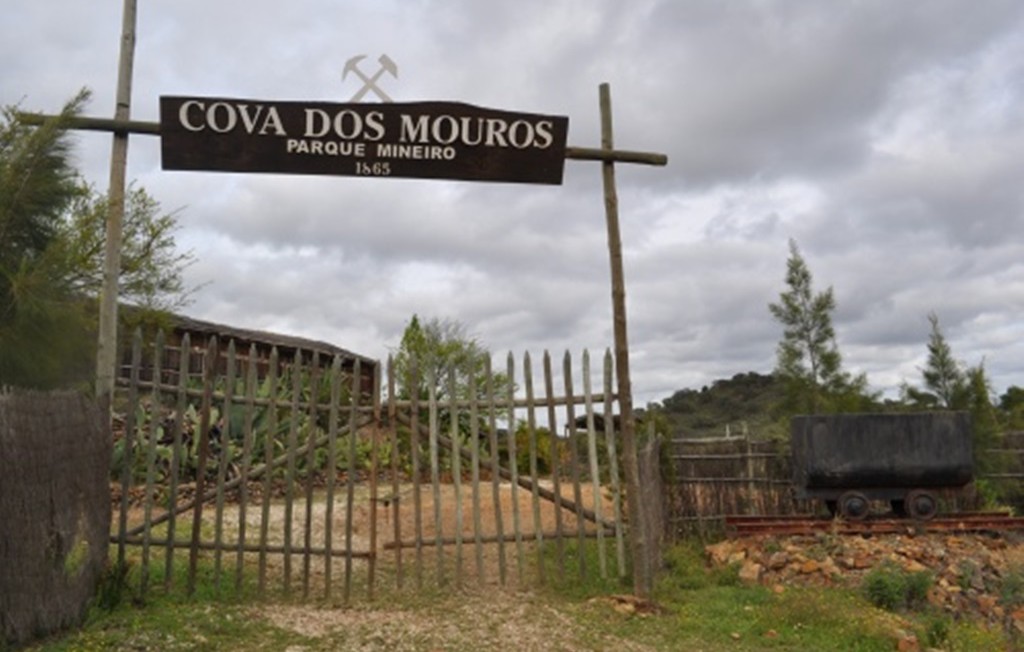
The pre-historic mining activity in the interior Algarve dates back from about 2.500 years BC., which left this region with a rich variety of archaeological remains. In this context, one can find scoria and clinker remains, casting crucibles, moulds and copper artefacts such as axes, saws and chisels). From the Iron Age inscribed funerary gravestones have been found and tombs as well as two fortified "Villas" from the Roman occupation dating from the 1st century BC.
The existing remains refer to copper mines with evidence of ancient exploration since Chalcolithic times to old prospecting works of the XIX century.
In this ancient mine nucleus the main shaft was identified with a depth of 30 meters, where copper ore with a NW - SE orientation was explored, integrated in a greywacke stone of the "Mértola Formation" geological unit. These hydrothermal mineralizations coincide with the axial zone of an anticline fold which crosses the region in the same orientation. In the proximity of this copper lode's system, there are several sites marked with remains of the Chalcolithic Period, necropolis from the Bronze age, from the Iron Age and Roman works.
One of the most important archaeological aspects is the study of the evolution of metallurgical knowledge of primitive man. The studies are based on primitive furnaces where ore was smelted, and a furnace replica exists here at the "Cova dos Mouros" archaeological mining nucleus.
+351 289 999 229
Call to national landline network
Call to national landline network