County / Leiria / Nazaré / Nazaré Cultural Center
A whole country
to discover!
to discover!
Nazaré Cultural Center
Art and Culture
Art and Culture
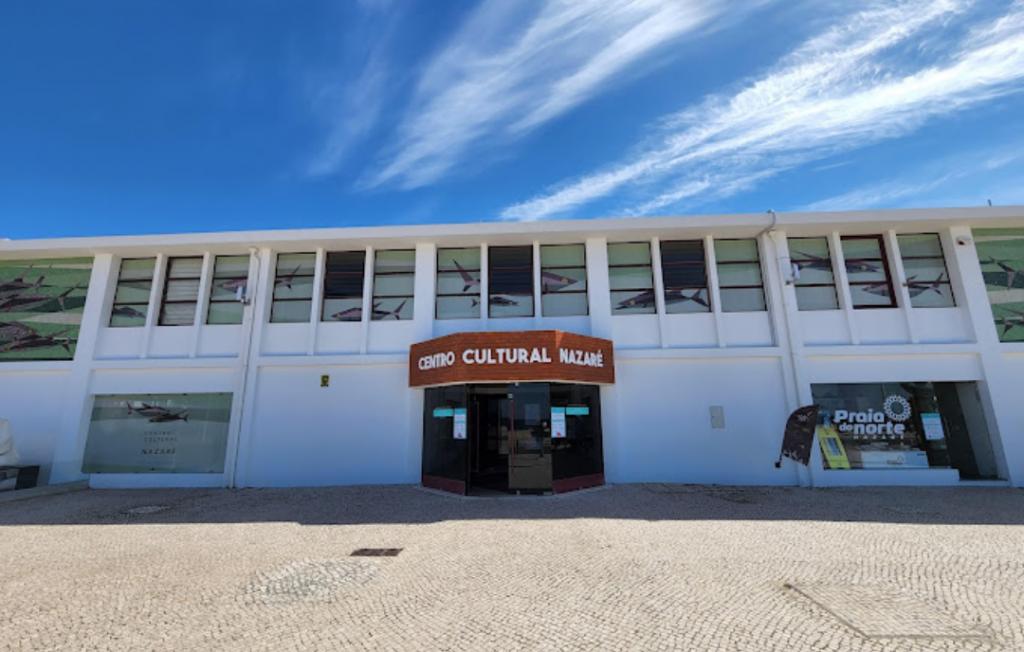
Until the mid-20th century, fish were sold in improvised auctions on the beach.
The fish trade was very primitive, carried out by private sellers, who were sought out by the masters of the largest fishing companies.
When the law was enacted requiring the sale of fish in a constructed auction, the first wooden structure appeared, which changed location several times.
The fish was placed on a rough bench and sold by employees of the Central Board of the Fishermen's House, at auction, in descending order of price.
One of the characteristics of this auction was the word “chui”, which was used here to indicate the purchase of the fish. When the buyer gave the “chui”, he received a ticket with the number of the corresponding box, through a long rod. The Nazaré auction was the first auction in the country where fish began to be sold by the kilo and not by the unit.
The first auction took place in the beach area in front of Rua da Liberdade. Fish such as sea bream, bream and hake were sold on platforms, but sardines and horse mackerel were sold in baskets and baskets, respectively.
The second and third auctions were still held on the sand, but always further south than the first, due to the need for expansion of the bathing area.
In 1956, the Central Board of the Fishermen's House presented the project for a new building to be built on land provided by the Municipality of Nazaré.
The interior and exterior were decorated with panels with a fishing theme, designed by Galhardo and manufactured at the Aleluia factory in Coimbra.
This building is located on Avenida Manuel Remígio, having been inaugurated on 24 December 1958 and ceased to operate on 22 March 1987.
With the construction of the Porto de Abrigo (1983), the fish market began to operate in that area (inaugurated on 29 April 1987), now with a computerized auction system.
The “Old Fish Market” then gave way to the current Nazaré Cultural Centre, which opened its doors to the public in 1995, a space that hosts temporary exhibitions and other cultural activities.
+351 262 187 729
Call to national landline network
Call to national landline network