County / Porto / Vila Nova de Gaia / Pedroso Monastery
A whole country
to discover!
to discover!
Pedroso Monastery
Culture and Heritage
Culture and Heritage
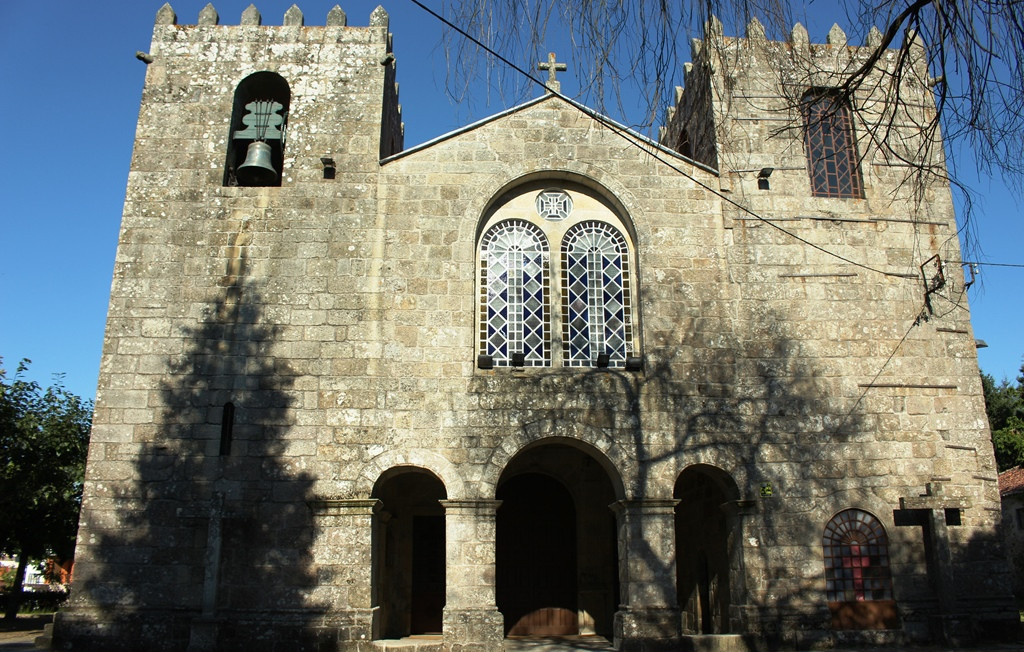
Although the founding date of the Benedictine monastery of Pedroso is unknown, it presumably dates from before the 10th century, with the cenobium having received a charter from King Afonso Henriques in 1128.
Its decline began in the 14th century, when it was subject to the commendatory regime. The last commendator, Cardinal Henrique, obtained a licence in 1560 to extinguish the monastery, attaching its rents to the patronage of the Society of Jesus of the College of Coimbra, which held the lordship until 1759, when it became the parish church.
The architectural complex still preserves the church, some agricultural facilities, the farmhouse, the most archaic part of which may still have medieval foundations, completed by a 16th and 20th century building, and a small area of cultivation, the result of the dismemberment of the monastery. There are no visible remains of most of the convent structures, including the cloister. The temple, of Romanesque origin, was enlarged during the Jesuit administration and again underwent substantial alterations in the 20th century to restore its supposed medieval appearance.
In the atrium and the interior you can still find the Renaissance space from the intervention in the second half of the 16th century. Despite the profound transformations it has undergone over the years, the Pedroso Monastery still has the symbolic value of a Benedictine monastery founded before the nation itself, preserving to some extent the built unity of the church and complementary buildings, integrated into a remarkable agricultural and forest setting.
Classified as a Monument of Public Interest by Order no. 309/2014 published in the Diário da República on 14 May 2014.
+351 22 784 2042
Call to national landline network
Call to national landline network